Research
Starke Finance Starke Staked SOL (rkSOL) Report - January 2026
In January, rkSOL remained broadly stable across core metrics, with steady supply and yields slightly above the network rate, while a late-month Meteora deposit boosted TVL and signaled growing DeFi integration.
Download the PDF
Estimated Reading Time: 8 minutes
Summary
In January, rkSOL displayed a mixed market profile, with stable protocol fundamentals alongside weakening price and liquidity conditions. Circulating supply remained essentially unchanged, reflecting balanced staking behavior and minimal volatility in token distribution. However, market capitalization and price declined meaningfully over the month, largely tracking SOL's broader downturn, while liquidity gradually tightened toward month-end.
Flow activity was subdued, with the month shaped by one major redemption event on January 14 that drove most of the net outflows. Despite these market headwinds, the holder base remained steady, indicating limited churn and continued participant retention.
On the performance side, rkSOL maintained a consistent staking yield, generally sitting slightly above Solana's native APY across epochs. Total SOL staked increased gradually, pointing to continued confidence and modest inflows into the protocol.
DeFi engagement marked a slight development late in the month, as a deposit of rkSOL into Meteora triggered a moderate rise in TVL and expanded rkSOL’s footprint within Solana’s liquidity ecosystem. While rkSOL's overall market share remains small, January highlighted steady protocol adoption and deeper integration opportunities despite broader market softness.
Quick Facts
Starke Staked SOL (rkSOL) is a liquid staking token (LST) on the Solana blockchain, launched on May 29, 2024. It represents SOL staked with our Starke Finance validator, allowing holders to earn staking rewards while keeping their assets liquid.
Instead of locking SOL in a traditional stake, users hold rkSOL, a token that mirrors the value of their underlying staked SOL and accrues rewards over time. This structure enables participation in network validation and yield generation without restricting access to funds, making rkSOL a staking alternative that also allows participation in DeFi protocols.
Token contract: EPCz5LK372vmvCkZH3HgSuGNKACJJwwxsofW6fypCPZL
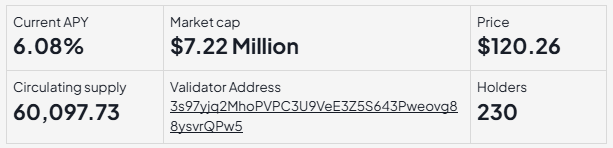
Source: Starke Finance (as of February 3, 2025)
Market & Growth Overview
This section analyzes rkSOL's market structure and growth metrics for January, such as supply, market capitalization, price, liquidity, net inflow, and holders. It provides insight into the protocol's stability, activity trends, and its response to broader movements within the Solana ecosystem.
Circulating Supply
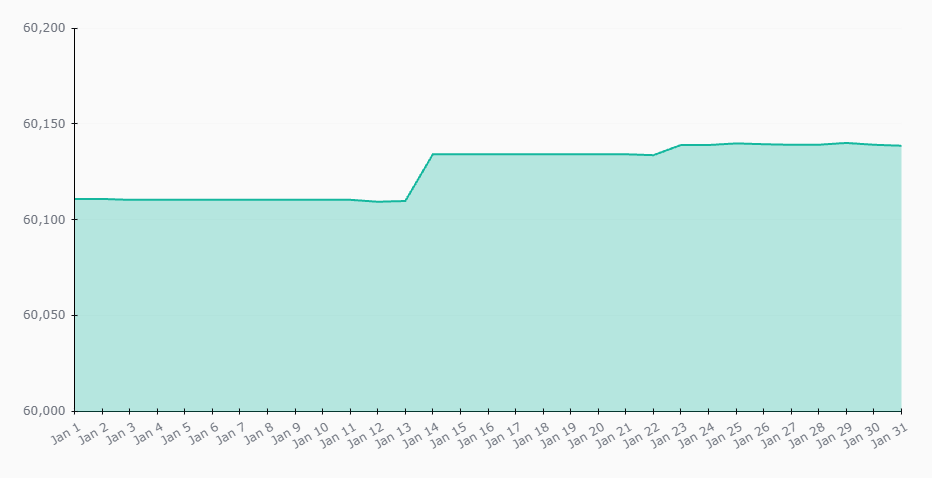
The circulating supply of rkSOL remained highly stable throughout January, edging slightly higher from 60,110.95 tokens on January 1 to 60,138.66 tokens by January 31, reflecting a modest monthly increase of around 0.05%.
January was characterized by calm supply conditions, with changes limited to minor daily fluctuations. For much of the first half of the month, circulating supply stayed close to the 60,110 level, indicating steady holder positioning.
The most notable movement occurred mid-month, when supply rose on January 14 to above 60,134 tokens. This suggests a small influx of newly circulating tokens tied to incremental staking activity.
After this shift, rkSOL supply remained within a tight 60,133-60,140 range through month-end, underscoring balanced staking behavior and minimal volatility.
Source: Solscan
Market Capitalization & Volume
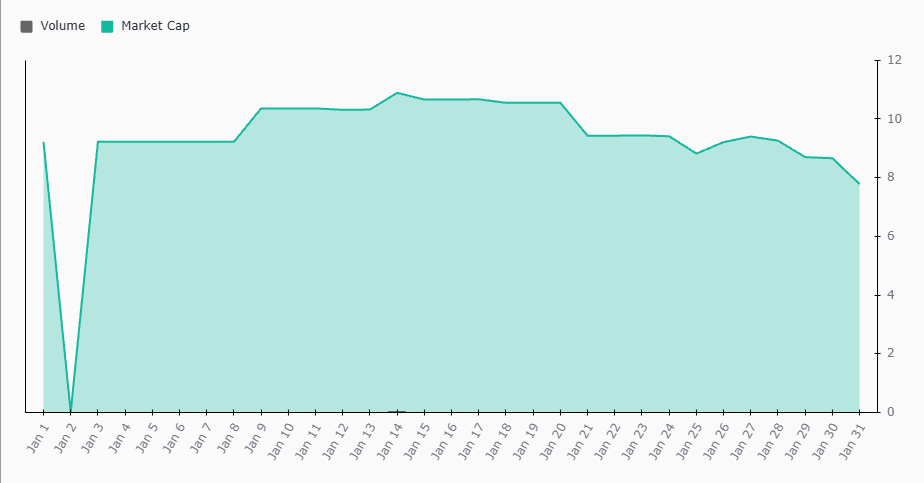
rkSOL's market capitalization experienced a downward month overall in January, sliding from $9.22 million on January 1 to $7.78 million by January 31, a decline of roughly 15.62%. The first week of the month remained fairly steady, with market cap holding close to the $9.2 million range and showing little variation.
Momentum shifted mid-month as valuations climbed above $10 million, peaking at $10.89 million on January 14. This jump was brief, however, and was followed by a gradual weakening in capitalization through the second half of the month. By the final days of January, rkSOL had fallen below $9 million, ending the month at its lowest point.
Volume activity was mostly muted across January, with several sessions recording almost no trading at all. The standout exception was January 14, when trading volume surged sharply to $37.31K, suggesting a short burst of liquidity before activity returned to low levels for the remainder of the month.
Source: birdeye (Data in USD millions)
Price
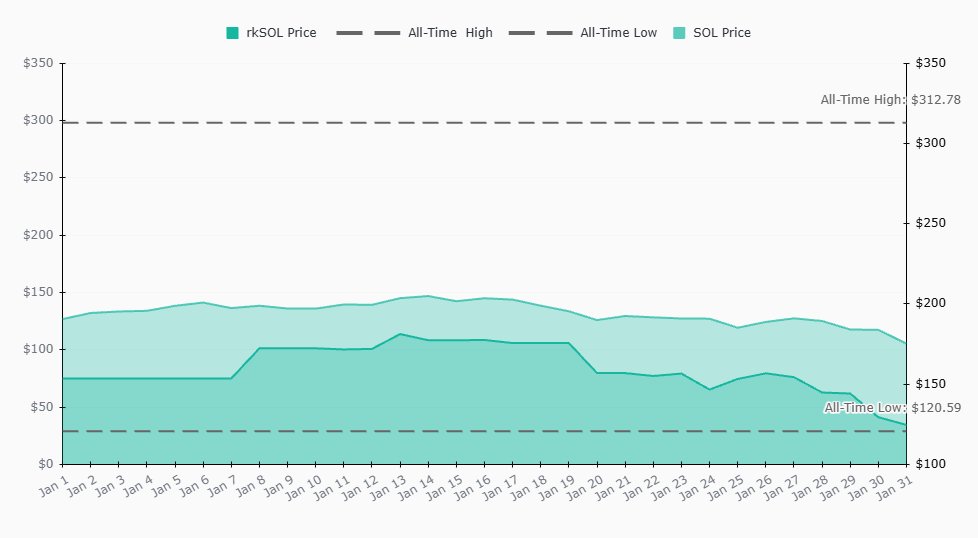
rkSOL's price experienced a significant decline over January, falling 18.87% from $153.54 at the start of the month to $124.56 by January 31. The month began with relative stability, as rkSOL held steady near $153 through the first week before moving higher in early January.
Mid-month, rkSOL briefly strengthened, reaching a local peak above $181 on January 13. This short rally coincided with a rise in SOL's price, highlighting the close relationship between rkSOL and its underlying asset. However, the momentum proved temporary, and prices began to trend downward again in the second half of the month.
SOL itself weakened notably toward month-end, dropping from the mid-$140s to near $105 by January 31. This broader market retreat was reflected in rkSOL's sharper pullback, with the token closing the month near its lowest levels.
Despite the decline, rkSOL remained above its all-time low of $120.59, though still far below its all-time high of $312.78. The spread between rkSOL and SOL stayed relatively tight throughout January, suggesting subdued staking premium conditions and limited yield-driven divergence during the period.
Source: Solscan, Starke Finance
Liquidity
Market depth for rkSOL shifted noticeably over January, with liquidity fluctuating early in the month before trending lower into month-end. Liquidity opened at $9.21 million on January 1 and briefly strengthened through the first half of the month, rising above $10 million and reaching a high of $10.85 million on January 14. The zero reading on January 2 appears to be an outlier caused by a data issue rather than a true liquidity collapse.
This mid-month peak was followed by a steady tightening in available liquidity, as levels slipped back under $10 million and continued to decline throughout the second half of January. By the final week, liquidity had moved into the mid-$8 million range, closing the month at $7.80 million.
January's pattern points to gradually weakening liquidity conditions, with market depth fading as the month progressed.
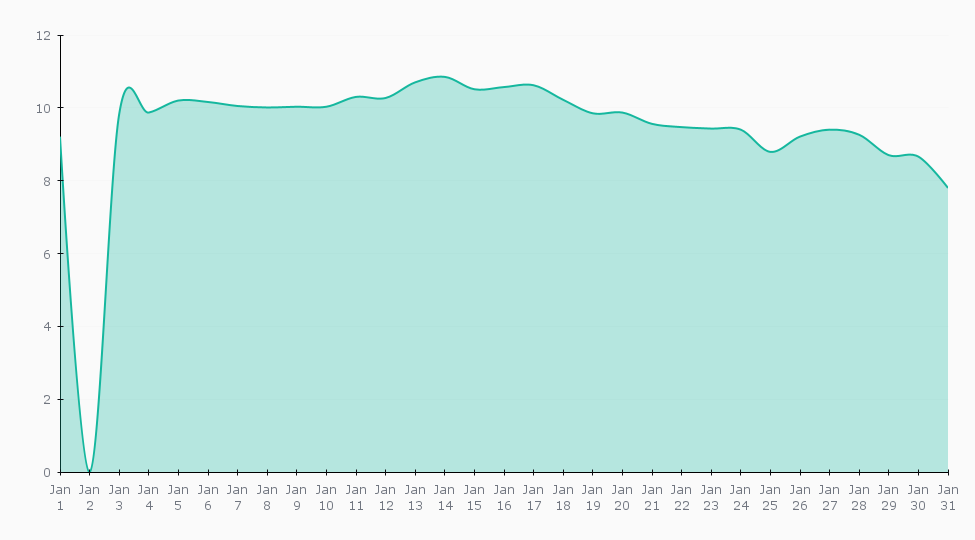
Source: birdeye (Data in USD millions)
Net Inflow
rkSOL flow activity in January reflected a month of limited participation, with most days showing negligible movement and net flows remaining close to zero. The month was largely characterized by small, intermittent outflows, indicating mild redemption pressure rather than sustained new demand.
The dominant event occurred on January 14, when rkSOL experienced a sharp net outflow of -$28.50K, driven by significant redemptions that outweighed the day's inflows. This single session accounted for the vast majority of the month's negative flow balance and marked the clearest shift in investor positioning.
Outside of this mid-month event, flows were scattered and modest. A brief positive uptick appeared on January 23, when rkSOL recorded a net inflow of +$0.77K, followed by several small inflow days late in the month. These were not enough to offset earlier withdrawals, and January closed with a total net inflow of -$29.29K.
Taken together, January's flow profile suggests a quiet market environment punctuated by one major redemption day, with capital movements otherwise remaining subdued and uneven.
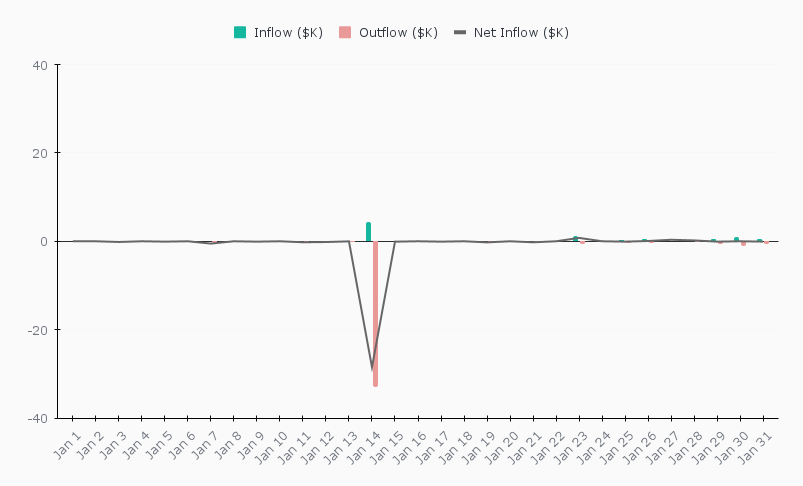
Source: birdeye (Data in USD thousands)
Holders
Holder activity for rkSOL was largely steady across January, with the number of addresses showing only small day-to-day variation. The month began with 229 holders and ended at 228, indicating virtually no net change in the holder base over the period.
Most of January saw counts moving within a tight 226-229 range, reflecting minor wallet adjustments rather than any meaningful shift in user participation. Brief dips appeared around January 9-10 and again near January 25, but these were quickly reversed as holder numbers stabilized toward month-end.
January's data suggests that rkSOL maintained a consistent holder presence, with participation remaining broadly intact despite modest fluctuations throughout the month.
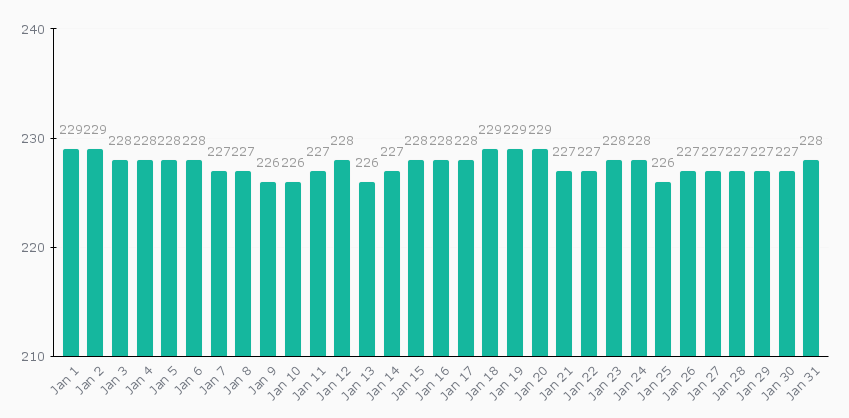
Source: Solscan
Performance
This section reviews rkSOL's performance over recent epochs, focusing on its annual percentage yield (APY) and how it evolved in relation to network-wide staking trends.
APY
Across epochs 904 to 918, rkSOL returns stayed steady, fluctuating only slightly around the 6% level. The yield profile remained smooth, with no major spikes or drops, suggesting stable staking conditions during the period.
rkSOL's APY moved largely in line with Solana's native network rate, often sitting marginally above it. While most epochs clustered between 6.06% and 6.21%, a brief uptick appeared in epoch 917, when rkSOL reached 6.32%, the highest reading in the series.
This pattern highlights rkSOL's consistent premium over the native APY, reflecting its ability to modestly outperform network staking yields across the observed epochs.
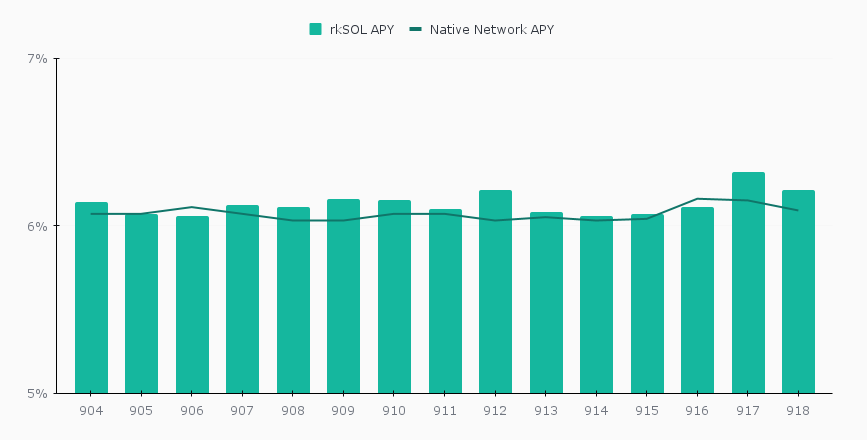
Source: Sanctum, Blockworks APY based on a 10-epoch average
Defi Integration
This section analyzes the evolution of rkSOL's Total Value Locked (TVL) throughout January. TVL represents the total value of assets deposited into the protocol and serves as a useful indicator of capital commitment, user participation, and the scale of rkSOL's adoption within the broader DeFi ecosystem.
Total Value Locked (TVL)
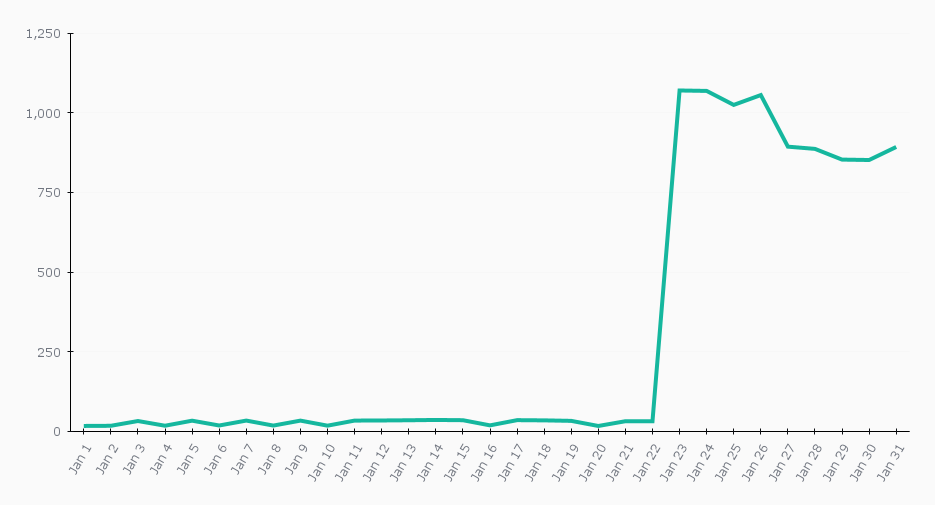
rkSOL's TVL followed an uneven trajectory during January. In the first three weeks of the month, deposited assets remained relatively modest, with TVL fluctuating between approximately $16 and $35. These small daily movements suggest limited variation in capital allocation and a steady level of protocol usage during the early part of the month.
A pronounced shift occurred on January 23, when TVL surged sharply above $1,070. This jump was driven by a small deposit of rkSOL into Meteora, which increased the amount of assets recorded as locked within DeFi liquidity positions.
Following this integration-driven increase, TVL remained elevated through the remainder of the month, gradually easing into the $850-$890 range by month-end.
Source: Solscan
Staking & Market Share
This section examines rkSOL's position within the Solana staking ecosystem, focusing on its share of total and liquid-staked SOL while examining how the amount staked evolved over the past month.
Total SOL Staked
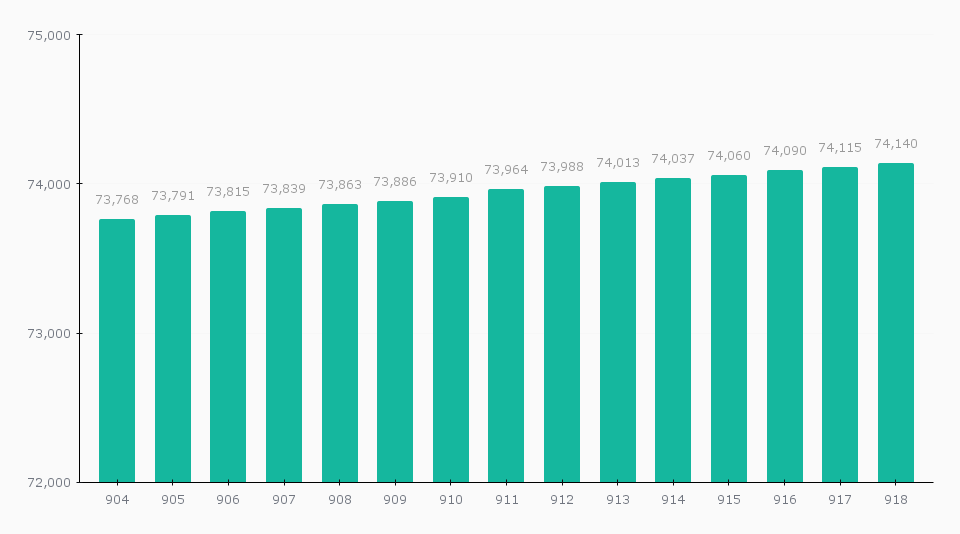
Total SOL staked in rkSOL increased gradually across epochs 904 to 918, reflecting steady growth in delegated assets over the period. Staked SOL rose from 73,768 in epoch 904 to 74,140 by epoch 918, representing a monthly increase of approximately 0.54%.
The progression was smooth and incremental, with each epoch showing small additions rather than abrupt shifts, suggesting consistent staking inflows and stable participant behavior. This gradual upward trend indicates continued confidence in rkSOL's staking framework, with the protocol attracting modest but persistent increases in total delegated SOL throughout the month.
Source: Blockworks, Solana Compass
Market Share
By the end of January, rkSOL's footprint within Solana's broader staking ecosystem remained relatively small but stable. rkSOL accounted for approximately 0.02% of all SOL staked across the network, indicating that its share of total delegated stake continues to be modest within the wider validator landscape.
Within the liquid staking sector specifically, rkSOL represented around 0.11% of total SOL staked through LSTs, positioning it as a niche participant in the competitive liquid staking market. These figures suggest that rkSOL is still in an early phase of adoption, with room to expand its presence as integrations and usage deepen across DeFi.
Despite its limited scale, the consistency of rkSOL's market share reflects steady protocol engagement and a stable base of participants, providing a foundation for gradual growth within both the overall staking environment and the LST segment.
Earn More, Stay Liquid with rkSOL
rkSOL is Starke Finance's liquid staking solution, designed to help you earn staking rewards while keeping your SOL fully liquid. It combines accessibility, efficiency, and performance, allowing you to participate in staking without locking your assets.
With rkSOL, your tokens continue to generate yield while remaining available for use across the Solana ecosystem, from trading and lending to participating in DeFi opportunities. Built on Starke Finance's high-performance infrastructure, rkSOL offers a seamless and transparent way to maximize your returns.
When holding rkSOL, you benefit from:
- Continuous yield: earn passive returns without locking your capital.
- Full flexibility: move, trade, or use rkSOL across DeFi protocols at any time.
- Simplicity: one token, continuously increasing in value through accrued yield.
- Transparency: easily monitor rkSOL's performance and value growth.
rkSOL empowers you to stay liquid, earn efficiently, and remain an active participant in the Solana ecosystem, all while enjoying the security and reliability of Starke Finance.
Stake smarter. Stay liquid. Choose rkSOL.
Disclaimer
This report has been prepared by Starke Finance to provide transparency and insight into the performance of its rkSOL token. The information presented is for informational and educational purposes only and should not be considered financial, investment, legal, or tax advice. Although all data and metrics are derived from reliable sources and on-chain analytics, Starke Finance makes no representations or warranties regarding the accuracy, completeness, or future reliability of this information. rkSOL's yield is subject to change based on network conditions and protocol updates. Readers and participants are encouraged to conduct their own due diligence before engaging in liquid staking or related activities.
Contributors

Ana CabaleiroFinancial Analyst